We install brands we trust
Nest, ecobee, Honeywell (Resideo) - the three brands with proven reliability, active firmware support, and parts available when something fails. We don't install off-brand thermostats with no support pipeline.
Most smart thermostat headaches come from DIY installs that hit a missing C-wire, two-stage equipment, or a heat pump. We do the wiring, the C-wire upgrade, the multi-stage configuration, the schedule, and the app on the first visit - across Trumbull, Mahoning, Portage, Ashtabula, and Columbiana.
Regularly $119 · Appointments are limited
Our technician inspects and tests your heating system before the cold weather hits. Carbon monoxide safety check included. No membership required.
$59 fall furnace tune-up for residential customers, for a limited time and while appointments last. No membership required. Repair costs, if needed, are separate.
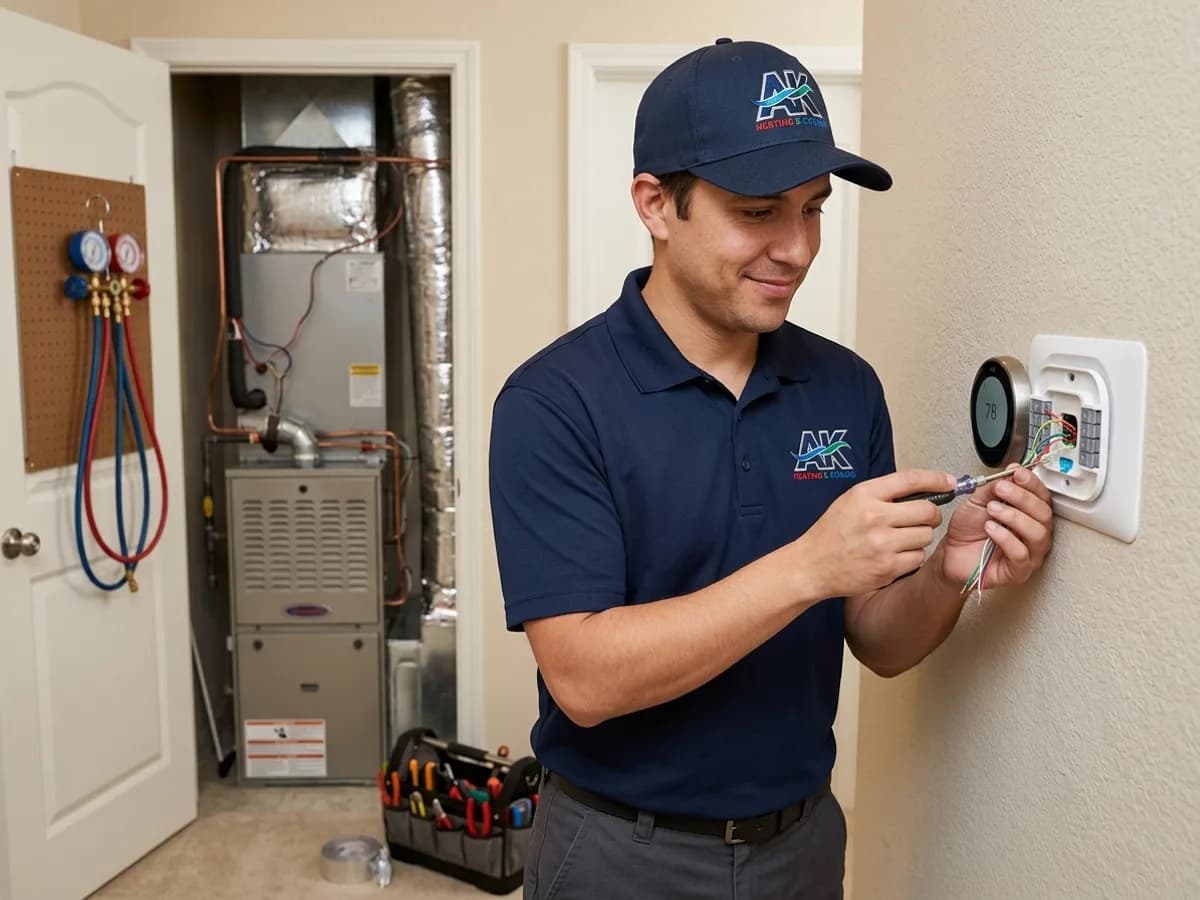
A smart thermostat is only as smart as its install. The hardware is a $250 box; the value comes from getting the wiring right, configuring the equipment type, programming a real setback schedule, and walking you through the app so you actually use the features you paid for. The DIY YouTube version of that takes most homeowners three hours and ends with the equipment running only its low stage forever.
Three things go wrong on DIY installs in NE Ohio. First, the C-wire. Many older Valley homes (Warren, Youngstown, Niles, Boardman) were wired in an era when thermostats ran on two AA batteries; the C-wire isn't there and the new smart thermostat keeps rebooting. Second, two-stage and variable-speed equipment. A Carrier Infinity, Trane XV, or Lennox SLP98 furnace has 6+ wires running to the equipment board, and getting them onto the right thermostat terminals matters. Third, heat pumps and dual-fuel hybrids - reversing valve direction (O vs B), auxiliary heat lockout, and balance-point handoff are all configuration the thermostat asks about during setup, and the wrong answers cost you efficiency all winter.
We do the install, the C-wire upgrade if needed, the equipment configuration, the schedule programming, the geofencing setup, the humidifier integration, and the Wi-Fi pairing on the first visit. You get a working smart thermostat and a 10-minute tour of the features that matter.
Every AKHC smart thermostat install includes the C-wire upgrade if needed, equipment-specific configuration, and full schedule and app setup before the tech leaves.
Most installs finish in 60-90 minutes. C-wire upgrades on harder wiring runs can push to 2 hours.
Tech checks what equipment you have (single-stage, two-stage, variable-speed, heat pump, dual-fuel, zoning), what wiring runs to the existing thermostat, and confirms the smart thermostat you picked is the right fit. If the equipment needs a different thermostat model than you bought, we'll tell you on the phone before the truck rolls.
If there's no C-wire at the wall, we either pull a new one from the air handler (cleanest fix) or install a Power Extender Kit / add-a-wire adapter (faster, equally reliable). The install quote tells you which option fits your house before we start.
Old thermostat off, wires labeled and pulled. Wall plate level, wires landed on the correct terminals for your specific equipment type. For heat pumps and dual-fuel, the reversing valve and aux-heat wires get extra attention - that's where DIY installs go wrong.
Power on, run through the equipment-type wizard (single-stage AC, two-stage furnace, heat pump with aux heat, etc.), set the reversing valve direction, set the balance point for dual-fuel. Then we build your weekly schedule with the ACCA-recommended setbacks and turn on geofencing if you want it.
Wi-Fi paired, account created in your name, app installed on your phone. We walk you through scheduling, manual overrides, geofencing, and the features that actually matter for your house. Test heating, test cooling, test aux heat on heat pump systems before we leave.
Smart thermostat install looks simple. The actual savings live in the details - here's how we get them right:
Nest, ecobee, Honeywell (Resideo) - the three brands with proven reliability, active firmware support, and parts available when something fails. We don't install off-brand thermostats with no support pipeline.
The thermostat asks 'what equipment do you have?' during setup. Wrong answer = wrong behavior all year. We've configured every common Carrier, Trane, Lennox, Goodman, Rheem, and Bryant furnace, AC, heat pump, and dual-fuel setup in NE Ohio. Right answers the first time.
This is where DIY installs cost the most. Auxiliary heat that kicks on too early runs your electric bill up; aux heat lockout set wrong leaves you cold on a 5F night. We set the balance point and lockout temperatures based on your actual equipment and Ohio utility rates.
If you need a C-wire, we either pull one or install the adapter - included in the install scope, not a surprise add-on. Most quoted prices online don't include this; ours does.
Factory default schedules are bland and conservative. We program ACCA-recommended setbacks for your actual schedule - which is where the 10%+ energy savings actually comes from. The thermostat is the tool; the schedule is the savings.
Before we leave, you know how to override the schedule, how to set vacation mode, how geofencing works, and how to check the app. No 'figure it out from the manual' handoff.
Questions about your home? We will give you straight answers, no pressure.
Contact usFor a single-stage gas furnace and AC with a C-wire already at the wall, yes - DIY is reasonable. The common DIY failures are: no C-wire (smart thermostat won't stay powered), two-stage or variable-speed equipment wired wrong (thermostat only runs first stage and you lose the efficiency you paid for), and heat pumps or dual-fuel systems where the auxiliary heat and reversing valve wiring is more complex than the install guide covers. If any of those apply, the $200-300 in install cost is worth it - we get the wiring right, configure the equipment type correctly in the app, and you skip the half-day of trial and error.
The C-wire (common wire) supplies continuous 24-volt power to the thermostat. Old mechanical and battery-powered thermostats didn't need one; smart thermostats do, because they're always-on devices running Wi-Fi and a screen. Many older NE Ohio homes were wired with only R, W, Y, and G - no C. Options are: pull a new C-wire from the equipment to the thermostat, install an add-a-wire (also called a 'PEK' kit on Nest or 'Power Extender Kit' on ecobee), or use a thermostat that draws power off the heating/cooling call wires instead. We diagnose which approach makes sense before recommending an upgrade.
Yes, but they need to be configured correctly. Heat pumps use a reversing valve (O or B wire) that the thermostat has to control. Auxiliary heat (electric strip or backup gas furnace) needs its own setup - including lockout temperatures so the strip heat doesn't kick in above the heat pump's efficient range. Nest, ecobee, and Honeywell all support heat pumps and dual-fuel hybrids, but the wiring labels and configuration menus are different on each. Wrong setup is the most common reason a heat pump runs aux heat for half the winter and runs up your electric bill.
Yes. Smart thermostats run their stored schedule locally and respond to manual setpoint changes at the wall even with no Wi-Fi. What stops working: the app, voice control (Alexa or Google Home), geofencing, energy reports, and remote schedule changes. Once internet comes back, the thermostat reconnects automatically. NE Ohio gets enough Spectrum and AT&T outages that this matters - your heat doesn't shut off when the modem goes down.
Real-world savings depend entirely on your usage patterns before the install. If you already drop your thermostat 7-10 degrees at night and when you're at work, a smart thermostat saves you very little - you were already efficient. If you leave the thermostat at 72F all day every day, you'll see 10-15% on heating and cooling bills, which is real money in NE Ohio. ACCA's recommendation is a 7-10F setback for at least 8 hours per day - that's where the 10%+ savings comes from. The thermostat just enforces what good behavior would have done on its own.
All three are solid; differences are in approach. Nest learns your schedule and tries to do it automatically - good for people who don't want to program anything, less control if you want specifics. ecobee uses remote room sensors so you can prioritize comfort in whichever room you're in - best pick if your house has hot/cold spots. Honeywell (T9, T10, VisionPRO) has the strongest multi-stage and zoning support and remote room sensors - common pick for homes with complex equipment. We don't push a specific brand - if you tell us your house and use case, we'll tell you which one we'd install at our own home.
Yes - most smart thermostats have a dedicated humidifier control wire and humidity-aware scheduling. NE Ohio winters dry indoor air to 15-20% relative humidity; a whole-house humidifier tied to the thermostat keeps it at the 30-40% sweet spot automatically. Same on the dehumidifier side for summer - the thermostat can call the dehumidifier when humidity climbs even if the AC isn't due to run for temperature.
Same-day dispatch from our Warren shop across five counties.
“Furnace went out on a Sunday night. AK had a tech in the driveway in 90 minutes, parts on the truck, and we were warm before kids' bedtime. Worth every dollar of the maintenance plan.”
“Our restaurant walk-in went down at 6am. AK answered the after-hours line on the second ring and had us running before lunch service. We've switched all of our refrigeration work to them.”
“Had Generac install, AC tune-up, and a humidifier swap done across two visits. One bill, one company, real techs. This is what local service is supposed to feel like.”

Once we set your schedule with the 7-10F setbacks, the thermostat does its job. The only thing that breaks the math is you - hitting manual override every afternoon because the house feels cool when you walk in. Resist. Give the schedule two weeks to feel normal. After that, your bill drops and you stop noticing the setback at all. Programmable thermostats that get manually overridden every day save nothing. Programmable thermostats that get left alone save 10-15%.
Three Alex Mantalis companies, one Warren HQ. Each with its own license and insurance — coordinated when you need more than one trade.
Plumbing, Drains, Waterproofing
Visit site →HVAC, Refrigeration & Generators
You are hereFire, Water & Mold Restoration
Visit site →